The modern food supply chain is defined by increasingly complex challenges. As food travels through longer supply chains, producers must maintain product quality and safety over extended periods. In this highly competitive industry, every single day of extended shelf life translates directly into significant financial value for producers and retailers alike. At the same time, shifting consumer preferences are driving a demand for “clean label” products – foods with fewer artificial preservatives. To meet these demands while actively working to reduce global food waste and achieve long-term shelf stability, packaging must perform as a highly engineered protective shield.
Understanding the science of preservation requires looking at the entire barrier spectrum. On one end, highly respirating fresh foods, such as certain fish, fruits, and vegetables, require a degree of gas exchange to prevent decay. On the other end of the spectrum, highly sensitive, prepared, or processed foods must be completely isolated from the atmosphere.
While the MPP Group’s primary focus lies on the higher end of the barrier spectrum, offering advanced solutions designed to maximize shelf life, the fundamental engineering remains the same: managing the interaction between the food, the package, and the environment.
The Chemistry of Decay: Why Barriers Matter
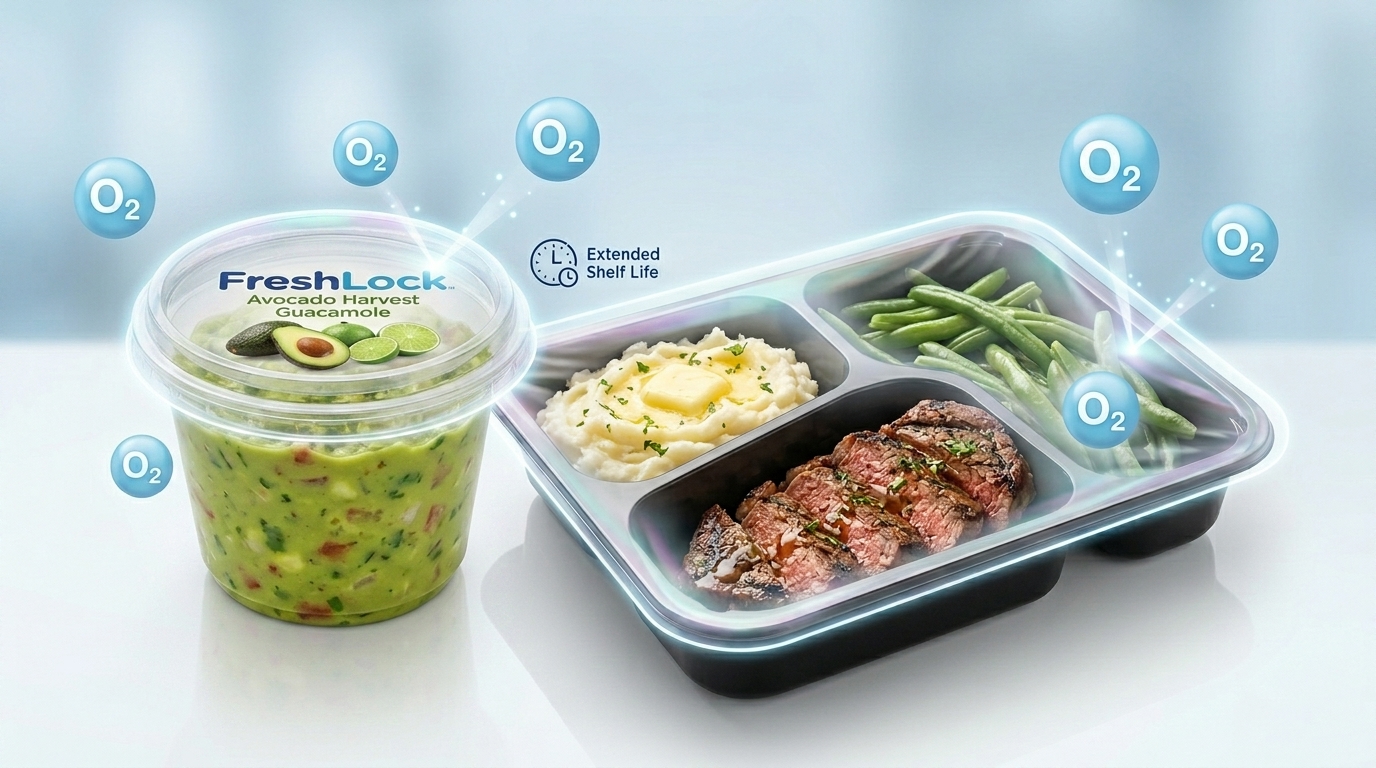
When sensitive foods are exposed to oxygen, a series of chemical and biological reactions begin that degrade the product. High-barrier packaging is designed to prevent four primary vectors of food spoilage:
- Fat Oxidation: Exposure to oxygen causes unsaturated fats and oils to break down, leading to rancidity, unpleasant odors, and a significant reduction in the nutritional value of the food.
- Discoloration: Oxygen reacts with natural pigments in food (such as myoglobin in meats or carotenoids in vegetables), causing rapid color fading or browning that makes the product unappealing to consumers.
- Flavor Degradation: Volatile flavor compounds that give food its distinct taste are highly sensitive to oxidation. Without a proper barrier, these compounds degrade, leaving the food tasting flat or stale.
- Microbial Growth: Oxygen creates an ideal environment for aerobic bacteria, yeasts, and molds to proliferate. Restricting oxygen is the most effective physical method to halt microbial spoilage and ensure food safety.
The Technology of Preservation: OTR, Multilayer Structures, and MAP
To protect sensitive foods from these degradation factors, packaging engineers measure and control the Oxygen Transmission Rate (OTR) – the quantity of oxygen gas that passes through a substance over a given period. Minimizing OTR requires a combination of advanced materials and packaging techniques:
- Multilayer Structures & EVOH: While standard polymers like Polypropylene (PP) provide excellent structural strength and moisture barriers, they have high OTR values. To combat this, manufacturers utilize co-extruded multilayer structures that incorporate a thin layer of EVOH (Ethylene Vinyl Alcohol). EVOH acts as an exceptional gas barrier, effectively stopping oxygen molecules from migrating through the packaging walls.
- Modified Atmosphere Packaging (MAP): Once a high-barrier container is produced, the air inside is replaced with a protective gas mixture (typically nitrogen and carbon dioxide) before sealing. The high-barrier multilayer structure then works to keep this modified atmosphere in, and external oxygen out, maintaining optimal preservation conditions.
The MPP Group Portfolio: High-Barrier and Sustainable Solutions
The MPP Group addresses these technical preservation challenges through two primary high-barrier product lines, designed to balance shelf-life extension with modern environmental standards.
Customizable CPET Solutions (MCP)
For applications requiring high-temperature resistance alongside barrier performance, such as dual-ovenable ready meals, the group offers CPET (Crystalline Polyethylene Terephthalate) trays. CPET naturally provides good gas barrier properties. The group can customize the thickness of the CPET tray to match the specific barrier requirements and shelf-life targets of the product, optimizing material use without compromising safety.
Multilayer PP (MLPP) with EVOH
For applications requiring maximum barrier protection, the group provides Multilayer Polypropylene (MLPP) solutions containing an integrated EVOH layer. This technology is utilized across the group’s divisions:
- Polyraz manufactures the high-barrier co-extruded MLPP sheets.
- MCP thermoforms these sheets into high-performance barrier trays.
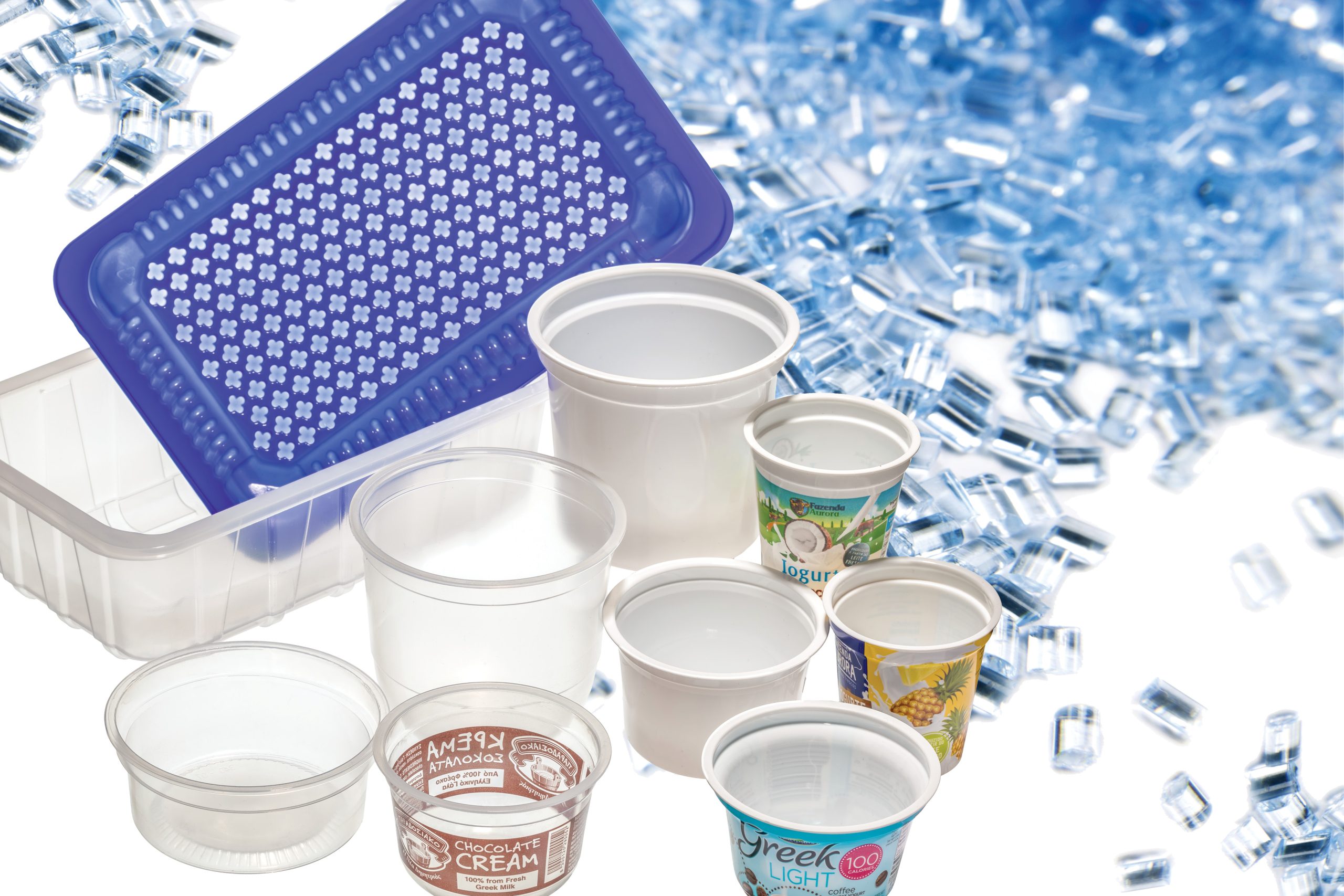
- MPP utilizes the material to produce high-barrier cups and containers.
The Sustainability Factor: A common challenge in the packaging industry is maintaining recyclability when mixing different polymers. Despite the presence of the EVOH barrier layer, the MPP Group’s MLPP solutions are engineered to remain fully recyclable within standard PP recycling streams, supporting circular economy goals.
Carbon Footprint Optimization
In addition to recyclability, the group assists food producers in evaluating the environmental impact of their packaging choices. Using the group’s Carbon Footprint Calculator, a comparative lifecycle analysis was conducted between a standard CPET product configuration and a Multilayer PP (MLPP) product configuration.
The analysis revealed that the PP-based (MLPP) product achieved a 22% lower carbon footprint compared to the CPET alternative. This data enables food manufacturers to make highly informed, data-driven decisions that balance barrier performance, shelf-life extension, and decarbonization goals.